
Developer Experience: Where Engineering Excellence Becomes Business Value
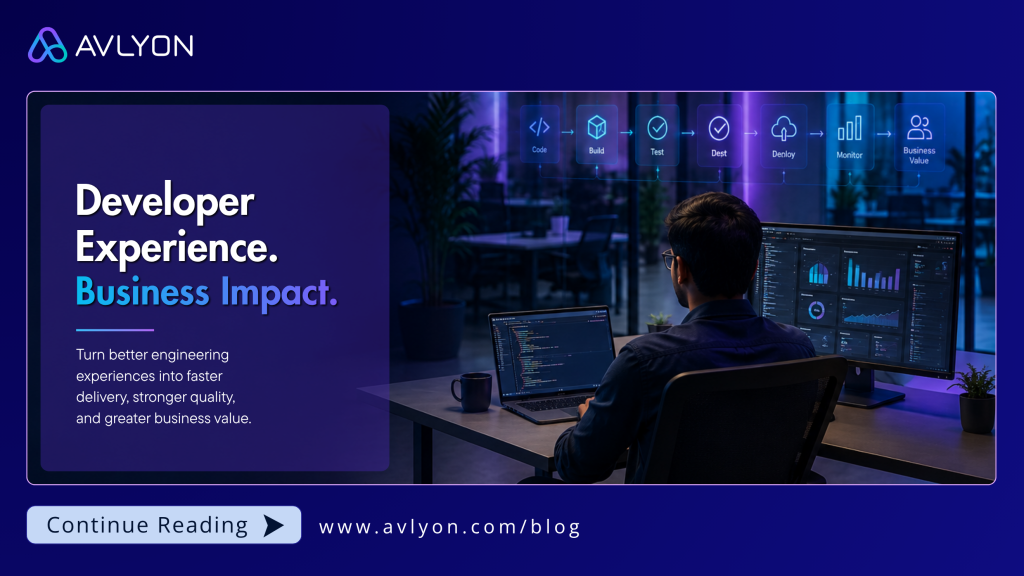
Developer Experience | Engineering Leadership Every company wants velocity. Few invest in the engine. Developer Experience, or DevX, is routinely treated as an internal engineering concern. Organizations talk about faster builds, better development environments, clearer documentation and automated pipelines as though they are simply conveniences for software engineers. The conversation often starts with a simple premise: engineers are more effective when their tools and processes get out of the way. That is true, but it misses the bigger picture. The real question is not simply whether developers experience less frustration. It is whether the way an organization builds software strengthens its ability to compete, execute and deliver value to customers. When viewed through this lens, DevX stops being a developer productivity initiative and becomes a business capability. A mature organization should not think about engineering in isolation. Investments in technology, engineering practices, platforms, AI capabilities and ways of working may begin inside the engineering organization, but their value should not stop there. They should improve delivery, strengthen business outcomes and ultimately create better experiences for clients, customers and end users. Developer Experience is a powerful example of this connection. Where most companies get stuck DevX has a persistent positioning problem. Leadership may hear the term and picture better code editors, expensive platform tooling or engineers optimizing pipelines for marginal efficiency gains. But organizations that deliver products quickly and adapt effectively to changing market conditions are not necessarily those with the largest teams or the biggest technology budgets. They are often the organizations with the least unnecessary friction between an idea and a reliable outcome. When engineering improvements start and end inside the technology team, they can struggle to secure sustained investment. However, when improvements to engineering systems contribute to faster time to market, better quality, more predictable delivery and stronger project economics, the conversation changes. DevX stops looking like an internal cost and becomes an investment in the organization’s ability to execute. This distinction is important because many organizations do not lack talented engineers or modern technologies. What they often lack is a deliberate approach to improving the system around those engineers. As teams and systems grow, small inefficiencies begin to compound, reducing the organization’s ability to turn engineering effort into delivered value. What scaling without DevX looks like The failure to address engineering friction rarely causes a sudden collapse. Instead, it creates a gradual and costly degradation of delivery capacity. A business identifies an urgent client or customer need. Product teams define the requirement, and engineers build the solution. Before that change reaches the customer, however, it may enter a maze of manual steps, fragile environments, slow test pipelines and fragmented documentation. Engineers spend time troubleshooting failed pipelines, requesting access, configuring environments and rediscovering knowledge that exists only in someone else’s head. Two organizations can employ equally talented engineers and adopt similar technologies. One may provide reproducible environments, reliable automated testing, accessible knowledge and clear system ownership, while the other depends heavily on manual handoffs, slow feedback and individual heroics. The headcount may be identical, but the effective engineering capacity is not. The difference lies in the engineering system around the people doing the work. Over time, this friction compounds. Release cycles become longer, small changes feel increasingly risky, and engineers spend more time navigating the delivery system than solving meaningful problems. By the time delayed roadmaps and missed opportunities become visible to leadership, the problem is often much larger than a missing tool. The delivery system itself has become increasingly difficult to change. The true economics of delivery friction Software creates value because it can change. Market priorities shift, security vulnerabilities emerge, regulations evolve, clients refine requirements and customers provide feedback. The ability to modify software safely and predictably is therefore one of the most important capabilities of a modern technology organization. Yet the true cost of a software change is rarely determined by the amount of code alone. It is influenced by the engineering effort required, the complexity of the system and the friction surrounding delivery. A useful way to think about it is: Cost of Change = Engineering Effort + System Complexity + Delivery Friction Some complexity is unavoidable, particularly in enterprise technology environments. However, a significant amount of delivery friction is created by the way organizations design their engineering systems, processes and ways of working. When unnecessary friction is reduced, the benefits can be seen across different delivery models. Protecting fixed-cost delivery economics In fixed-cost engagements, the commercial value of the project is agreed upfront. Every hour spent dealing with avoidable environment problems, manual processes or inefficient delivery workflows consumes engineering capacity. That capacity could otherwise be focused on solving client problems, improving quality or responding to changing needs. DevX helps protect delivery economics by reducing unnecessary internal friction and allowing more of the available engineering capacity to be directed towards meaningful outcomes. The benefit is not simply lower effort. It is a greater ability to convert engineering effort into client value. Compounding long-term product value For long-lived products, delivery friction compounds over time. When deployments are painful, teams tend to release less frequently. Larger and less frequent releases can introduce greater risk. When changes become difficult, improvements are postponed, and when feedback is slow, problems are discovered later. Over time, friction contributes to technical debt, and technical debt creates even more friction. A strong DevX foundation can help reverse this cycle. When changes are easier and safer to make, teams can improve systems continuously rather than waiting for large transformation programmes. The benefit compounds. An improvement to the engineering system today can make every future change easier. Transforming speed into quality Speed and quality are often presented as trade-offs. In a weak engineering system, they can be. Under delivery pressure, teams may reduce testing, postpone automation or take shortcuts that create problems later. That may appear faster in the short term, but the cost has simply moved elsewhere. A defect that could have been identified earlier becomes a production issue. A manual process
The Best Engineering Partnerships Don’t End at Handover
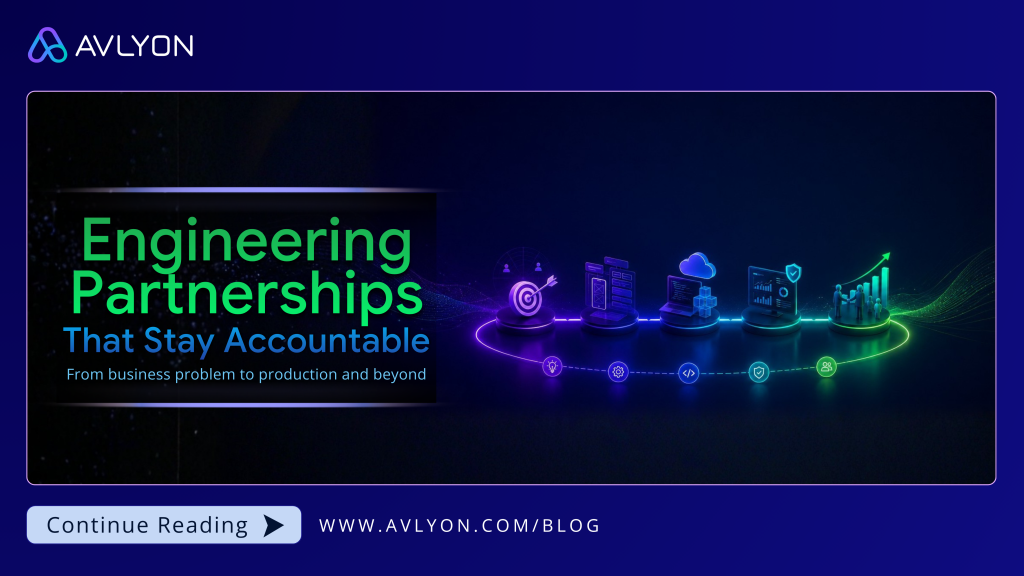
Rethinking the engineering partnership, from business problem to production and beyond. There is a pattern that most software engineering engagements follow. A client arrives with a set of requirements, an engineering partner builds against them, the product ships, and the relationship winds down until the next request comes in. This works. It has worked for years, and it will keep working for a certain kind of project. But it also leaves something on the table, for both sides. The Limits of the Requirements-and-Handover Model When engineering starts at the requirements document, it inherits every assumption baked into that document, whether or not those assumptions were ever tested against the real business problem. The engineering partner builds what was asked for. The client receives what was asked for. If the two are not quite the same thing as what the business actually needed, nobody finds out until after launch, when the cost of being wrong is highest and the least flexible to fix. There is also a quieter cost. Once the handover happens, the engineering partner’s stake in the outcome effectively ends: they deliver against spec, and what happens next, adoption, growth, revenue, becomes someone else’s problem to solve. That arrangement is clean on paper, but it is also the reason so many well-built products struggle after launch. The people who understood the system best are no longer in the room when it matters most. A Different Way to Engage There is a more strategic way to structure an engineering partnership, one that starts earlier and stays longer. It begins with the business problem itself, not the requirements document that follows it. Before any engineering decision gets made, the real question gets asked: what problem is this actually solving, and for whom. This matters because a requirements document usually describes one way of solving the problem, not the only way, and not always the best one. A partner who understands the underlying problem is in a position to propose a different approach that the client’s own requirements never considered, one that reduces cost, runs more efficiently, improves the user experience, or holds up better as things scale. Choosing the right technology from that vantage point often lowers engineering, scaling, and infrastructure costs well beyond what the original requirements accounted for. That kind of alternative rarely gets surfaced when the engagement starts at the document instead of the problem. From there, the engagement moves through a deliberate sequence. Business problem identification: Understanding what the client is actually trying to solve, and for which customer, before a single line of code gets written. MVP scoping: Defining the smallest version of the product that tests the real assumption, rather than the largest version the budget can support. Develop, deploy, and manage: Building the product, taking it to production, and operating it there, with full ownership of technical decisions, timelines, and quality, not just execution against a spec someone else wrote. Client onboarding: Carrying the product through to the people who will actually use it, so the transition from built to adopted does not fall into a gap between teams. The engineering partner owns this end to end. The client is free to focus on business development, sales, and growth, knowing the product itself is not something they need to manage day to day. This does not mean the partner stays forever, nor should it. As the product matures and stabilizes, and once the client builds sufficient engineering capability in-house to take it over, winding the engagement down is often the right call. If the client sees enough value to want the relationship to continue, that is a good outcome too. But even where the formal engagement winds down, staying available in an extended support capacity tends to benefit the client regardless, since the team that built the system remains the fastest path back to an answer if something unexpected comes up later. Why This Changes the Incentives The difference between this model and the traditional one is not really about process. It is about who has skin in the game. In a requirements-and-handover engagement, the engineering partner is measured against a spec. In an end-to-end engagement, the engineering partner is measured against whether the business problem actually got solved. That is a meaningfully different incentive, and it changes how decisions get made at every stage. Scoping gets more honest: A bloated first release helps nobody if it fails to prove anything, so the MVP stays focused on the real assumption. Production is designed in from the start: The team building it is the team taking it there, so shortcuts that only work in a demo do not make it into the build. Engagement does not stop at launch: Launch was never the finish line to begin with, so the partner stays accountable for what happens after, including the operational commitments that come with running in production. What This Requires in Practice Owning an engagement end to end is a different job from executing against a spec, and it shows up in specific, practical ways rather than just a philosophy. Architecture decisions get made with production in mind, not just the demo: Scaling, security, and failure modes get considered at design time, because the same team answers for them later. Observability and monitoring get built in, not added after something breaks: Production health should be visible from day one, so issues surface through monitoring before an end customer ever notices them, rather than the other way around. Support and maintenance commitments get built into the engagement, not negotiated afterward: When a partner is willing to back a solution with a multi-year managed and maintenance engagement, that is a concrete signal of confidence in what was built, not just a sales term. Onboarding is treated as part of delivery, not an afterthought: The people who will use the product day to day get trained and supported as part of the handover, not left to figure it out from documentation. None of this is unique to
Why Businesses Lose Customers After Hours and How AI Is Changing That
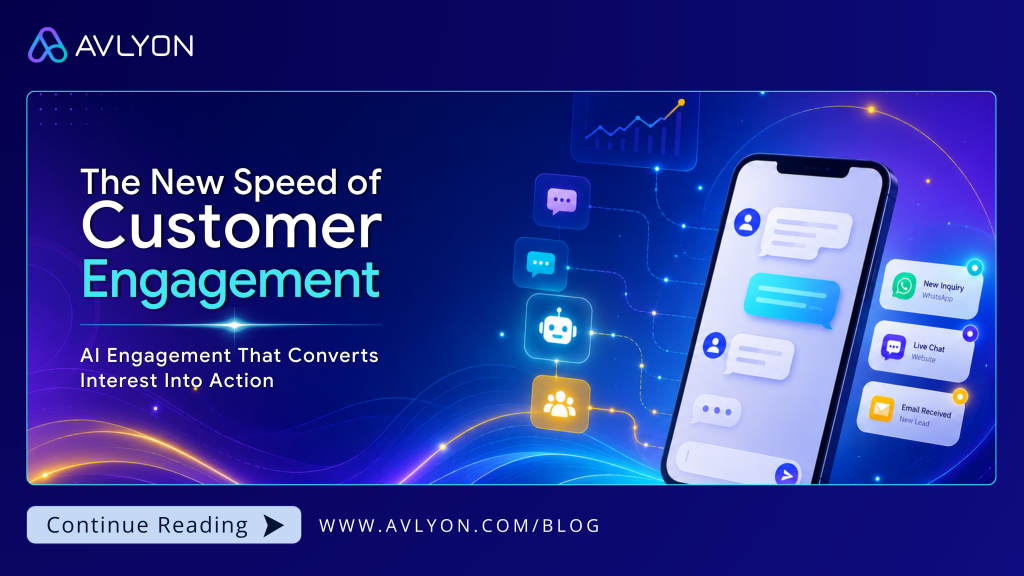
How AI engagement is helping businesses respond faster and convert more customers There is a moment most businesses know too well. A potential customer reaches out late in the evening, interested, ready to ask questions, and possibly ready to buy. No one responds. By the next morning, they have already moved on to a competitor who replied faster. The opportunity disappears quietly. Not because the product was weak or the pricing was wrong, but because the business was unavailable at the moment the customer was ready to engage. For many organizations, this is not a sales problem. It is a responsiveness problem. And in today’s digital environment, responsiveness has become one of the most important competitive advantages a business can have. The Attention Window Is Smaller Than Ever Customer attention moves quickly. Studies consistently show that response time directly affects lead conversion. A delay of even an hour can significantly reduce the likelihood of turning interest into action. Yet many businesses still rely entirely on human availability to manage customer engagement. The result is a gap between when customers reach out and when businesses are able to respond. That gap is becoming increasingly expensive. Today’s customers compare providers, explore alternatives, and make decisions faster than ever before. A customer who does not receive a timely response often does not wait. They simply move on. Businesses that fail to close the availability gap are not just slower. They become invisible at the exact moment customers are ready to engage. What Customers Expect Today Customer expectations have fundamentally changed. People now interact daily with digital experiences that provide instant updates, real-time answers, and personalized recommendations. Whether booking a service, ordering food, tracking deliveries, or exploring financial products, customers expect fast and relevant interactions regardless of the time of day. Those expectations do not disappear after business hours. Someone browsing at 11 PM expects the same level of responsiveness as someone reaching out at 11 AM. For businesses relying solely on human teams, this creates a structural limitation that becomes harder to scale as demand grows. Across industries, organizations gaining momentum are the ones finding ways to stay responsive throughout the customer journey, not only during working hours. How AI Is Reshaping Customer Engagement Artificial intelligence is making it possible for businesses to stay responsive without relying on large teams working around the clock. Modern AI engagement systems can now hold meaningful conversations with customers across platforms like WhatsApp, SMS, websites, and other messaging channels. They can answer questions instantly, qualify leads, guide customer inquiries, and connect high-value prospects to the right teams in real time. What separates today’s AI engagement from the chatbots businesses experimented with years ago is the quality of the interaction. Earlier systems often felt rigid and scripted. Modern AI tools can understand context, recognize customer intent, adapt responses dynamically, and deliver interactions that feel more natural and relevant. The goal is not to replace human relationships. It is to remove the friction that prevents those relationships from starting. Smarter Lead Qualification One of the biggest challenges for sales teams is identifying which inquiries deserve immediate attention. AI engagement systems can analyze conversation patterns, customer behavior, and engagement signals to prioritize leads automatically. Instead of manually filtering inquiries, teams can focus their time on prospects who show genuine buying intent. This reduces wasted effort while improving response speed where it matters most. Personalization at Scale Personalized engagement has always been valuable, but traditionally it has been difficult to scale consistently. AI changes that equation. Businesses can now tailor messaging based on customer preferences, behaviors, interaction history, and timing across thousands of conversations simultaneously. Customers receive interactions that feel relevant and timely without businesses having to expand support teams proportionally. As customer expectations continue to rise, personalization is quickly becoming a baseline expectation rather than a differentiator. Meeting Customers Across Multiple Channels Customers no longer engage through a single platform. Some prefer WhatsApp. Others respond better through SMS, websites, email, or social platforms. Businesses that force customers into one communication channel often create unnecessary friction. AI-powered engagement systems help organizations maintain a consistent presence across multiple channels at the same time, allowing customers to interact through the platforms they already use comfortably. This flexibility is becoming increasingly important as customer behavior continues to fragment across digital ecosystems. Industries Already Seeing the Impact The shift toward AI-powered engagement is already reshaping how businesses operate across multiple industries. Real Estate Property inquiries happen at all hours, often from buyers comparing multiple listings simultaneously. AI engagement allows agencies to respond immediately, answer common questions, qualify buyers, and schedule appointments without delays. Health and Wellness Clinics, gyms, and wellness providers manage large volumes of appointment requests, reminders, and customer follow-ups. Intelligent automation improves responsiveness while reducing administrative pressure on frontline teams. Restaurants and Hospitality Reservation inquiries, menu questions, and promotional campaigns require consistency and speed. AI engagement helps hospitality businesses maintain responsive customer interactions without overextending staff resources. Education Educational institutions often manage high inquiry volumes during enrollment periods. AI systems can guide prospective students, answer frequently asked questions, and identify inquiries requiring personal attention. Banking and Financial Services In industries where trust and responsiveness are critical, AI engagement supports faster communication, smoother onboarding experiences, and more accessible customer support while maintaining consistency and accuracy. What Effective AI Engagement Actually Looks Like Not every AI engagement system creates a better customer experience. Consistency With Brand Voice The best AI interactions feel like a natural extension of the business itself. Businesses should be able to define tone, messaging style, and communication guidelines so automated interactions reinforce brand identity rather than weaken it. Knowing When Human Support Matters AI works best when it recognizes its own limitations. Well-designed systems know when conversations require human judgment and can escalate interactions smoothly without frustrating customers. The transition should feel seamless rather than disruptive. Integration With Existing Workflows AI engagement should not operate in isolation. Systems that integrate with CRM platforms, sales tools, and operational workflows create a
Elevating Digital Success With User Centred UI and UX
Designing Experiences That Empower Users and Drive Business Growth
Corporate Treasury Automation and Why It Matters Today

Treasury teams face increasing pressure to deliver real time cash visibility and accurate reporting, yet many still depend on spreadsheets and manual workflows. Discover how modern automation transforms treasury operations and strengthens financial stability.
Cloud-Native Architecture for Modern Applications: Building Agility, Scalability, and Reliability

Cloud-Native Architecture for Modern Applications: Building Agility, Scalability, and Reliability Modern businesses need applications that are fast, adaptable, and able to handle unpredictable workloads. Legacy monolithic systems often fall short, leaving companies struggling with downtime, costly maintenance, and limited flexibility. Cloud-native architecture changes this by combining microservices, containerization, and automation into a framework that makes scaling and innovation easier. According to CNCF’s 2024 State of Cloud Native report, 84% of organizations are running containers in production, highlighting how cloud-native has moved from early adoption to mainstream practice. Why Cloud-Native Matters Unlike traditional systems that rely on centralized designs, cloud-native applications are built to perform in dynamic environments. They use cloud services to deliver faster deployment, stronger resilience, and continuous scalability. Businesses that adopt this approach reduce time-to-market, maintain reliable performance during demand spikes, and cut infrastructure waste. Key benefits include: Agility: Continuous delivery and rapid iteration cycles shorten development timelines. Scalability: Systems adjust automatically to demand, avoiding over-provisioning or outages. Resilience: Distributed microservices limit the impact of failures and speed up recovery. Efficiency: On-demand resources lower operating costs compared to static infrastructure. Building Stability Before Scaling Successful AI feature rollouts begin in controlled environments. Instead of exposing all users to a new model immediately, teams should adopt incremental testing. Shadow deployments, where AI models run silently in the background, allow predictions to be compared against real outcomes without affecting user experience. Similarly, phased A/B testing ensures that features demonstrate measurable improvements before being scaled further. At Avlyon, our engineering teams guide clients through phased rollouts with robust monitoring. This approach minimizes risk while building confidence that AI features are ready to scale responsibly. Core Principles of Cloud-Native Architecture MicroservicesApplications are divided into small, independent services. This structure improves development velocity and prevents single points of failure. ContainersTechnologies such as Docker and Kubernetes package applications with dependencies, ensuring consistency across environments and simplifying deployment at scale. DevOps and AutomationAutomated CI/CD pipelines streamline releases, reduce errors, and support continuous improvement. Observability and Monitoring Monitoring tools track system health in real time. Metrics such as latency, throughput, and error rates help teams detect and resolve issues before they affect users. Challenges in Cloud-Native Adoption Adopting cloud-native requires more than tools; it demands a mindset shift and new processes. Cultural Change: Teams must embrace DevOps collaboration instead of working in silos. Operational Complexity: Distributed systems need robust monitoring and governance to avoid blind spots. Security Risks: Containers and APIs expand the attack surface, making proactive security practices essential. A McKinsey survey found that 70% of cloud-migration programs stall due to operational and cultural barriers, underlining the importance of leadership, planning, and cross-functional alignment. Real-World Impact of Cloud-Native Enterprises across industries are already achieving measurable gains: Retailers scale microservices during seasonal sales to handle 10x traffic without disruption. Fintech firms use container orchestration to ensure secure, uninterrupted digital payments. SaaS providers accelerate release cycles, moving from quarterly updates to weekly improvements. At Avlyon, our engineering teams design and implement cloud-native systems that balance speed with stability. We help clients deploy strategies that are technically sound, cost-efficient, and future-ready. Final Thought Cloud-native architecture is more than a technology shift. It is a foundation for building applications that adapt quickly, scale responsibly, and maintain long-term resilience. By embracing microservices, containers, automation, and governance, organizations set themselves up for innovation and sustainable success. At Avlyon, we guide businesses through this transition, ensuring they gain not just the benefits of the cloud, but the confidence that their systems are designed to grow and evolve with them. If your team is ready to unlock the potential of cloud-native, visit www.avlyon.com to connect with our experts.
Empowered Engineering Teams
Empowered Engineering Teams In today’s fast-paced digital world, customers expect seamless digital experiences and rapid innovation. For organizations aiming to meet these demands, the secret lies in creating highly skilled, empowered engineering teams. These teams excel by focusing on three critical dimensions of product success: viability, usability, and feasibility. By working iteratively and collaboratively, they consistently solve customer problems and deliver value through custom software solutions, product engineering and scalable processes while crafting world-class user experiences. Here’s how they do it: How Empowered Teams Operate Iterative Problem-Solving: Empowered teams thrive in agile environments, breaking down complex problems into manageable chunks. By iteratively delivering small, testable features, they ensure a consistent flow of value while minimizing risks. Rapid Prototyping and Testing: Teams use prototyping and continuous user feedback to test ideas early and often. This iterative approach allows them to pivot quickly, saving time and resources. Alignment with Goals: By focusing on high-impact objectives rather than a laundry list of features, teams ensure their work contributes directly to customer satisfaction and organizational success. Balancing Key Dimensions: Successful teams evaluate viability (will this solution achieve the desired business outcomes?), usability (is the solution intuitive and delightful for users?), and feasibility (can it be built with available technology and resources?) at every step. Deeper Domain Understanding: These teams invest time to deeply understand the client’s vision, product domain, and customer pain points. This knowledge enables them to craft solutions that address real challenges effectively. Autonomy and Accountability: Empowered teams have the autonomy to make decisions within their domain, fostering ownership and accountability. This autonomy drives innovation and motivates the team to deliver exceptional results. Quality as a Shared Responsibility: In empowered teams, quality is never an afterthought. Every team member, from engineers to designers, owns the responsibility for delivering a high-quality product. This collective commitment ensures excellence is embedded into every step of the process. Delivering Value: A Continuous Cycle Empowered teams excel because they understand that delivering value is a journey, not a destination. Here’s how they do it: Understanding Customer Problems: Through research, interviews, and analytics, the team gains a deep understanding of customer pain points. Prioritizing Outcomes Over Outputs: Instead of focusing on the number of features delivered, they emphasize outcomes, measurable improvements to the customer experience. Continuous Improvement: Retrospectives and feedback loops enable teams to learn from successes and failures, continuously refining their processes and solutions. Creating World-Class Experiences The magic of an empowered team lies in its ability to combine technical excellence with user-centric design. By aligning around a shared vision and leveraging the strengths of each team member, these teams create products that stand out in competitive markets. They deliver value not just through functionality, but by crafting experiences that resonate with users and solve their problems seamlessly. The Role of Leadership in Building Empowered Team A key factor in the success of empowered teams is the leadership that nurtures and builds them. Experienced leaders play a pivotal role in creating the right environment, one where collaboration, trust, and innovation flourish. At Avlyon, our leadership team is deeply experienced in building such teams and differentiates itself in impactful ways. By empowering teams with the right tools, guidance, and support, we ensure they are set up to succeed. The Anatomy of an Empowered Engineering Team Here is a typical team anatomy: Tech Lead : Acting as the technical guide, the TL ensures the team’s solutions are scalable, reliable, and aligned with the company’s technical vision. This role owns the Feasibility dimension. Engineers: Engineers bring ideas to life. Whether writing clean, efficient code or developing cutting-edge solutions, they are the backbone of the team’s delivery capabilities. Designers: Designers focus on user experience (UX) and user interface (UI), ensuring that products not only work but also delight users. Their empathy driven approach translates customer needs into intuitive, aesthetic interfaces. This role owns the Usability dimension. Product Owner (PO): Acting as the voice of the customer, the PO prioritizes features and ensures the team’s work aligns with business objectives and user needs. They balance the strategic and tactical to keep the team focused on delivering value. This role owns the viability dimension. Final Thoughts In an era where digital transformation and agility are non-negotiable, empowered engineering teams are the engine that drives consistent value delivery. By fostering collaboration, autonomy, and a relentless focus on the customer, organizations can transform how they solve problems and deliver custom software solutions. The key to success lies in trusting the team, empowering them to make decisions, and giving them the tools they need to thrive. At Avlyon, we believe in the power of empowered teams. By building a culture of collaboration and innovation, we’re not just creating product, we’re shaping the future of customer experiences. Ready to empower your digital transformation journey? Partner with Avlyon to unlock scalable, innovative solutions tailored to your needs. Visit www.avlyon.com to learn more about how our engineering teams can help you achieve sustainable success and thrive in today’s dynamic marketplace.