
The Best Engineering Partnerships Don’t End at Handover
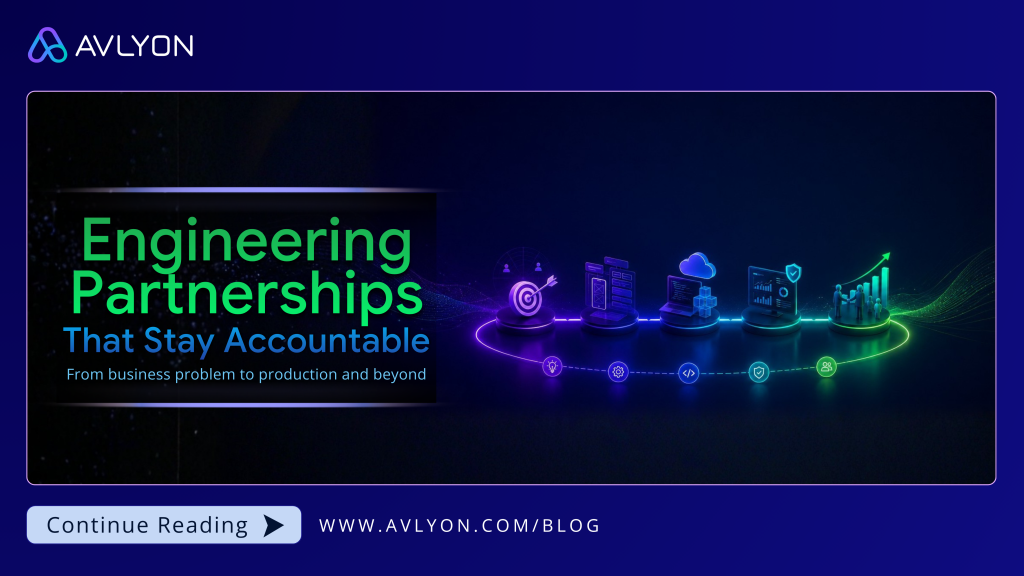
Rethinking the engineering partnership, from business problem to production and beyond. There is a pattern that most software engineering engagements follow. A client arrives with a set of requirements, an engineering partner builds against them, the product ships, and the relationship winds down until the next request comes in. This works. It has worked for years, and it will keep working for a certain kind of project. But it also leaves something on the table, for both sides. The Limits of the Requirements-and-Handover Model When engineering starts at the requirements document, it inherits every assumption baked into that document, whether or not those assumptions were ever tested against the real business problem. The engineering partner builds what was asked for. The client receives what was asked for. If the two are not quite the same thing as what the business actually needed, nobody finds out until after launch, when the cost of being wrong is highest and the least flexible to fix. There is also a quieter cost. Once the handover happens, the engineering partner’s stake in the outcome effectively ends: they deliver against spec, and what happens next, adoption, growth, revenue, becomes someone else’s problem to solve. That arrangement is clean on paper, but it is also the reason so many well-built products struggle after launch. The people who understood the system best are no longer in the room when it matters most. A Different Way to Engage There is a more strategic way to structure an engineering partnership, one that starts earlier and stays longer. It begins with the business problem itself, not the requirements document that follows it. Before any engineering decision gets made, the real question gets asked: what problem is this actually solving, and for whom. This matters because a requirements document usually describes one way of solving the problem, not the only way, and not always the best one. A partner who understands the underlying problem is in a position to propose a different approach that the client’s own requirements never considered, one that reduces cost, runs more efficiently, improves the user experience, or holds up better as things scale. Choosing the right technology from that vantage point often lowers engineering, scaling, and infrastructure costs well beyond what the original requirements accounted for. That kind of alternative rarely gets surfaced when the engagement starts at the document instead of the problem. From there, the engagement moves through a deliberate sequence. Business problem identification: Understanding what the client is actually trying to solve, and for which customer, before a single line of code gets written. MVP scoping: Defining the smallest version of the product that tests the real assumption, rather than the largest version the budget can support. Develop, deploy, and manage: Building the product, taking it to production, and operating it there, with full ownership of technical decisions, timelines, and quality, not just execution against a spec someone else wrote. Client onboarding: Carrying the product through to the people who will actually use it, so the transition from built to adopted does not fall into a gap between teams. The engineering partner owns this end to end. The client is free to focus on business development, sales, and growth, knowing the product itself is not something they need to manage day to day. This does not mean the partner stays forever, nor should it. As the product matures and stabilizes, and once the client builds sufficient engineering capability in-house to take it over, winding the engagement down is often the right call. If the client sees enough value to want the relationship to continue, that is a good outcome too. But even where the formal engagement winds down, staying available in an extended support capacity tends to benefit the client regardless, since the team that built the system remains the fastest path back to an answer if something unexpected comes up later. Why This Changes the Incentives The difference between this model and the traditional one is not really about process. It is about who has skin in the game. In a requirements-and-handover engagement, the engineering partner is measured against a spec. In an end-to-end engagement, the engineering partner is measured against whether the business problem actually got solved. That is a meaningfully different incentive, and it changes how decisions get made at every stage. Scoping gets more honest: A bloated first release helps nobody if it fails to prove anything, so the MVP stays focused on the real assumption. Production is designed in from the start: The team building it is the team taking it there, so shortcuts that only work in a demo do not make it into the build. Engagement does not stop at launch: Launch was never the finish line to begin with, so the partner stays accountable for what happens after, including the operational commitments that come with running in production. What This Requires in Practice Owning an engagement end to end is a different job from executing against a spec, and it shows up in specific, practical ways rather than just a philosophy. Architecture decisions get made with production in mind, not just the demo: Scaling, security, and failure modes get considered at design time, because the same team answers for them later. Observability and monitoring get built in, not added after something breaks: Production health should be visible from day one, so issues surface through monitoring before an end customer ever notices them, rather than the other way around. Support and maintenance commitments get built into the engagement, not negotiated afterward: When a partner is willing to back a solution with a multi-year managed and maintenance engagement, that is a concrete signal of confidence in what was built, not just a sales term. Onboarding is treated as part of delivery, not an afterthought: The people who will use the product day to day get trained and supported as part of the handover, not left to figure it out from documentation. None of this is unique to
Why Businesses Lose Customers After Hours and How AI Is Changing That
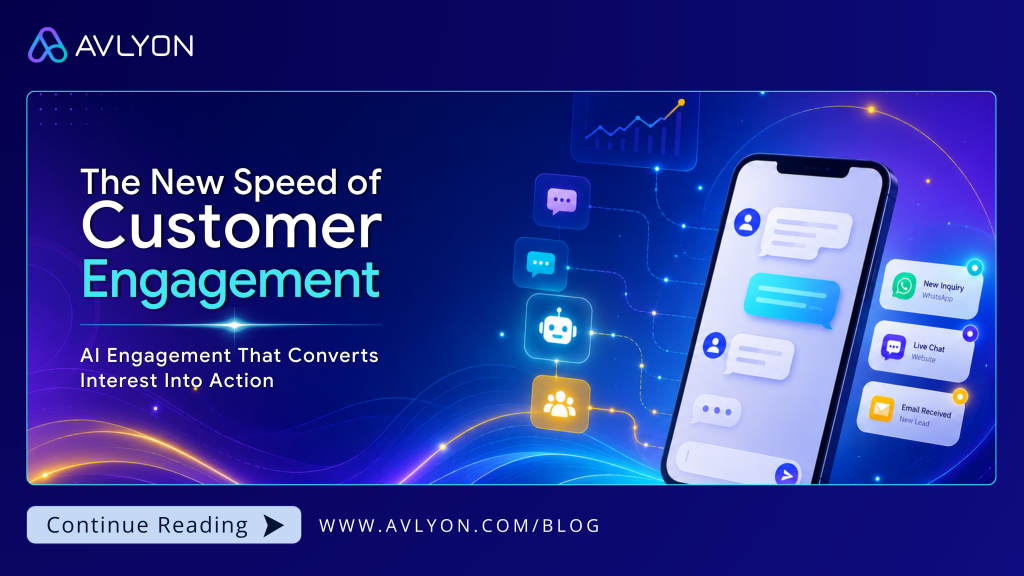
How AI engagement is helping businesses respond faster and convert more customers There is a moment most businesses know too well. A potential customer reaches out late in the evening, interested, ready to ask questions, and possibly ready to buy. No one responds. By the next morning, they have already moved on to a competitor who replied faster. The opportunity disappears quietly. Not because the product was weak or the pricing was wrong, but because the business was unavailable at the moment the customer was ready to engage. For many organizations, this is not a sales problem. It is a responsiveness problem. And in today’s digital environment, responsiveness has become one of the most important competitive advantages a business can have. The Attention Window Is Smaller Than Ever Customer attention moves quickly. Studies consistently show that response time directly affects lead conversion. A delay of even an hour can significantly reduce the likelihood of turning interest into action. Yet many businesses still rely entirely on human availability to manage customer engagement. The result is a gap between when customers reach out and when businesses are able to respond. That gap is becoming increasingly expensive. Today’s customers compare providers, explore alternatives, and make decisions faster than ever before. A customer who does not receive a timely response often does not wait. They simply move on. Businesses that fail to close the availability gap are not just slower. They become invisible at the exact moment customers are ready to engage. What Customers Expect Today Customer expectations have fundamentally changed. People now interact daily with digital experiences that provide instant updates, real-time answers, and personalized recommendations. Whether booking a service, ordering food, tracking deliveries, or exploring financial products, customers expect fast and relevant interactions regardless of the time of day. Those expectations do not disappear after business hours. Someone browsing at 11 PM expects the same level of responsiveness as someone reaching out at 11 AM. For businesses relying solely on human teams, this creates a structural limitation that becomes harder to scale as demand grows. Across industries, organizations gaining momentum are the ones finding ways to stay responsive throughout the customer journey, not only during working hours. How AI Is Reshaping Customer Engagement Artificial intelligence is making it possible for businesses to stay responsive without relying on large teams working around the clock. Modern AI engagement systems can now hold meaningful conversations with customers across platforms like WhatsApp, SMS, websites, and other messaging channels. They can answer questions instantly, qualify leads, guide customer inquiries, and connect high-value prospects to the right teams in real time. What separates today’s AI engagement from the chatbots businesses experimented with years ago is the quality of the interaction. Earlier systems often felt rigid and scripted. Modern AI tools can understand context, recognize customer intent, adapt responses dynamically, and deliver interactions that feel more natural and relevant. The goal is not to replace human relationships. It is to remove the friction that prevents those relationships from starting. Smarter Lead Qualification One of the biggest challenges for sales teams is identifying which inquiries deserve immediate attention. AI engagement systems can analyze conversation patterns, customer behavior, and engagement signals to prioritize leads automatically. Instead of manually filtering inquiries, teams can focus their time on prospects who show genuine buying intent. This reduces wasted effort while improving response speed where it matters most. Personalization at Scale Personalized engagement has always been valuable, but traditionally it has been difficult to scale consistently. AI changes that equation. Businesses can now tailor messaging based on customer preferences, behaviors, interaction history, and timing across thousands of conversations simultaneously. Customers receive interactions that feel relevant and timely without businesses having to expand support teams proportionally. As customer expectations continue to rise, personalization is quickly becoming a baseline expectation rather than a differentiator. Meeting Customers Across Multiple Channels Customers no longer engage through a single platform. Some prefer WhatsApp. Others respond better through SMS, websites, email, or social platforms. Businesses that force customers into one communication channel often create unnecessary friction. AI-powered engagement systems help organizations maintain a consistent presence across multiple channels at the same time, allowing customers to interact through the platforms they already use comfortably. This flexibility is becoming increasingly important as customer behavior continues to fragment across digital ecosystems. Industries Already Seeing the Impact The shift toward AI-powered engagement is already reshaping how businesses operate across multiple industries. Real Estate Property inquiries happen at all hours, often from buyers comparing multiple listings simultaneously. AI engagement allows agencies to respond immediately, answer common questions, qualify buyers, and schedule appointments without delays. Health and Wellness Clinics, gyms, and wellness providers manage large volumes of appointment requests, reminders, and customer follow-ups. Intelligent automation improves responsiveness while reducing administrative pressure on frontline teams. Restaurants and Hospitality Reservation inquiries, menu questions, and promotional campaigns require consistency and speed. AI engagement helps hospitality businesses maintain responsive customer interactions without overextending staff resources. Education Educational institutions often manage high inquiry volumes during enrollment periods. AI systems can guide prospective students, answer frequently asked questions, and identify inquiries requiring personal attention. Banking and Financial Services In industries where trust and responsiveness are critical, AI engagement supports faster communication, smoother onboarding experiences, and more accessible customer support while maintaining consistency and accuracy. What Effective AI Engagement Actually Looks Like Not every AI engagement system creates a better customer experience. Consistency With Brand Voice The best AI interactions feel like a natural extension of the business itself. Businesses should be able to define tone, messaging style, and communication guidelines so automated interactions reinforce brand identity rather than weaken it. Knowing When Human Support Matters AI works best when it recognizes its own limitations. Well-designed systems know when conversations require human judgment and can escalate interactions smoothly without frustrating customers. The transition should feel seamless rather than disruptive. Integration With Existing Workflows AI engagement should not operate in isolation. Systems that integrate with CRM platforms, sales tools, and operational workflows create a